Bleeding After Tooth Extraction: When to Worry
Written & Researched By
Editorial Team · product research desk
Sources: ADA guidelines, Mayo Clinic, PubMed, peer-reviewed dental literature
Published: September 14, 2026
Affiliate Disclosure: This article contains affiliate links. If you purchase through our links, we may earn a small commission at no extra cost to you. This supports the editorial desk. See our full disclosure and How We Make Money.
Short answer: Aftercare bleeding cards usually describe light oozing or blood-tinged saliva for about 4 to 6 hours, with a gauze-pressure station as the first habit. Bright-red flow that soaks a pad in minutes and does not slow with steady bite pressure is the phone-call pattern those pages print — not a blog diagnosis. Follow your written card if it differs.
JawPainAfterToothExtraction is an editorial desk. We compile published dental guidance, manufacturer specs, and community consensus. We do not run an in-house lab or a test fleet, and we do not claim we personally treated patients. This page is a gauze-pressure station — bite-gauze, then a pantry tea-bag stand-in, then head-above-heart loft — not a diagnosis page and not a “bleeding-control kit.”
Listing check: Confirm this is a gauze-pressure station plus a tea bag stand-in, not a diagnosis page. A wedge is upright / overnight loft — not a sealed “bleeding-control kit.”
Call-threshold sibling: When to Worry About Swelling After Tooth Extraction. Suture loosening that can restart oozing: Stitches After Tooth Extraction. Inhale suction that those sheets file next to a fragile clot: Smoking After Tooth Extraction. Limited opening while you sit upright: Jaw Stiffness After Tooth Extraction. Hub: What to Expect.
Before you click a wedge (desk checklist)
- Did the office already send gauze home? Most extraction bags include pads. A sealed “bleeding-control kit” is a skip if you already have folded gauze and a timer.
- Tea bag is pantry, not a SKU. Clinic sheets sometimes name a moistened black tea bag as a second pressure stand-in. That is a kitchen item, not an Amazon listing this desk is adding.
- Wedge vs stacked pillows: a single-piece wedge is optional loft if stacked cushions slide. Confirm 7–10 inch loft — not a travel U-pillow. Sleep station: How to Sleep After Tooth Extraction.
- Soak-through in minutes is a call, not a cart. If bright-red flow keeps replacing pads, phone the office (or urgent care if they said to). Do not wait for a pillow to ship.
- Research price: a single-piece wedge often sits around $30–$50; dentist-supplied gauze and a pantry tea bag are $0 extra. Those are research bands, not a live quote.
What Those Sheets Call Usual Oozing
Public aftercare bleeding pages usually separate looks-dramatic saliva from active flow. This desk did not measure sockets.
During the first few hours, those cards often describe:
- Blood-tinged saliva that looks louder than the actual volume — saliva mixes with a small amount of blood
- Slow oozing that trends down over about 4 to 6 hours
- Pink or light-red stain on a spit or a gauze change
- Darker red on the pad as a clot is forming — the language those sheets treat as expected, not a complication label
A teaspoon of blood in saliva can fill the mouth and look alarming. That volume note is a clinic-sheet observation, not a clearance to ignore soak-through.
The Gauze-Pressure Station (Habits Those Cards Name)
These are logistics those pages print. They are not a treatment protocol and not a guarantee a clot will hold.
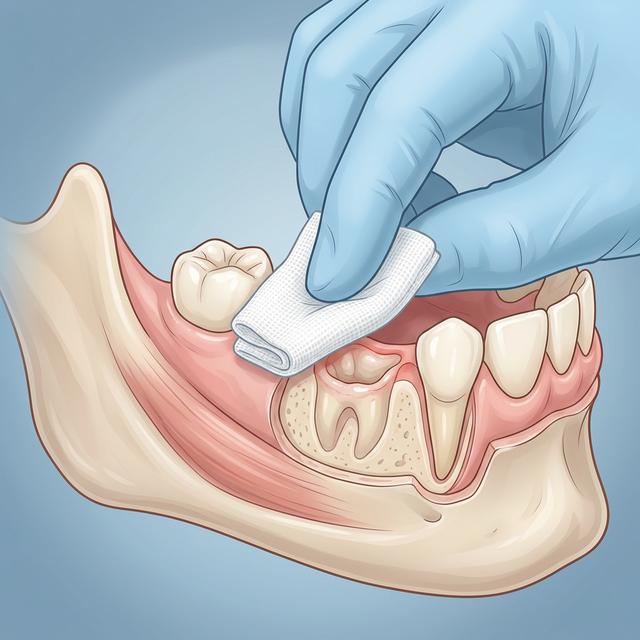
Bite gauze first
Clinic sheets commonly ask you to fold a clean pad, set it on the site, and bite with steady pressure for about 30 to 45 minutes without peeking. Checking every few minutes is the habit those pages say disrupts a forming clot. A timer is the desk method.
If oozing continues, the same cards usually say replace with a fresh pad and repeat — still pressure, not a new product.
Tea-bag stand-in (if the sheet named it)
If oozing continues after one or two gauze rounds, some public pages name a moistened regular black tea bag (not herbal) as a second pressure stand-in: wring it, place it on the site, bite about 30 minutes. ADA- and clinic-sheet language treats this as a home pressure option, not a clinically tested protocol from this desk. We did not run a tannic-acid trial.
Head-above-heart loft
Those sheets often ask you to sit upright or sleep with the head above the heart. A wedge pillow is optional furniture if stacked pillows slide. Confirm loft in the 7- to 10-inch band — not a travel U-pillow. Compare: Best Recovery Pillows. Hub: Recovery Products.
Habits Those Pages File Next to Restarted Bleeding
During the first 24 hours, aftercare cards commonly ask you to skip:
- Forceful spitting — pressure on a fresh clot
- Rinsing — many sheets wait about 24 hours
- Straws — suction language; methods: When Can I Use a Straw After Tooth Extraction?
- Smoking or vaping — inhale suction plus chemicals; smoking wait
- Exercise or heavy lifting — pressure language; activity ladder
- Hot liquids — heat column on drink cards; drinks matrix
- Alcohol — blood-thinning language on those sheets; alcohol card
- Aspirin you added yourself — office / physician question if it is not already on your written list
When to Skip DIY and Call
Most first-day oozing follows the 4-to-6-hour fade those pages print. These are the patterns public cards treat as a dentist (or ER) question — not a kit:
- Heavy, bright-red flow that soaks gauze within about 10 minutes and does not slow with steady pressure
- Bleeding that restarts heavily after it had stopped for several hours
- Large clots filling the mouth repeatedly
- Oozing that continues beyond about 8 to 12 hours with no improvement despite the pressure station on your card
- Dizziness, lightheadedness, or feeling faint
- Difficulty breathing — emergency-department language on those pages. Do not wait for a wedge.
Suture edges that look open after a stitch loosens: Stitches After Tooth Extraction. A cheek that is still growing after day 3 is a different call: When to Worry About Swelling.
Blood-Thinning Medicines (Clinic-First)
If you take warfarin, aspirin, clopidogrel, or a newer anticoagulant, aftercare pages treat that as a before-extraction conversation with the dentist and the prescribing clinician. This desk will not invent a hold or a dose.
Do not stop a blood-thinning medicine on your own. That is a physician / dentist question, not a blog instruction.
Research Snapshot: Hour-by-Hour Language
Windows below are research bands from public aftercare bleeding pages. Your written card wins.
| Timeframe | Language those sheets usually print |
|---|---|
| First 2 hours | Active oozing; gauze changes on the timer they named |
| Hours 2–6 | Oozing trends down; pads may show only pink stain |
| Hours 6–24 | Blood-tinged saliva can still show; active flow should be minimal |
| Day 2 | No active flow; a dark red or brownish look is often described as the clot |
| Days 3–5 | No bleeding; white/yellow film over the site is often described as healing tissue, not pus by itself |
Day-by-day companion: Tooth Extraction Recovery: Day by Day. White-tissue vs infection language: White Tissue at the Extraction Site.
Tagged Amazon cards (confirm the live titles)
| Listing | Research price band | What to confirm before you click |
|---|---|---|
| Kolbs-style bed wedge | About $30–$50 (research) | Live title is a single-piece wedge in the 7–10 inch loft band — not a travel U-pillow, not a “bleeding-control kit” |
| Tagged wedge search | Research band varies | Use this if the live DP title drifted to a sleep bundle or a sealed kit |
Desk shortlist (not a socket trial): If the office gauze and stacked pillows already cover the first night, skip the cart. We did not time clots on patients. A wedge is loft. Gauze is pressure. A tea bag is pantry. If the live title is a “bleeding-control kit,” stay on the pressure station.
When to skip DIY: Skip diagnosing a bleed from a selfie. Skip adding aspirin this desk did not see on your card. Skip waiting for a wedge to ship if bright-red soak-through is already happening — call. A pillow does not replace a missed written-medicine question.
Frequently Asked Questions
How long is oozing usual after an extraction?
Those cards commonly print 4 to 6 hours of light oozing or pink saliva. Your written window wins.
Do I need to buy gauze?
Usually no. The office bag is the first station. A sealed kit is a skip if pads are already in the house.
When is bleeding a same-day call?
Soak-through in minutes that does not slow with the pressure habit on your card, restart after hours of quiet, or feeling faint. When in doubt, the office is the lower-friction move.
Key Takeaway
Bleeding after extraction is a gauze-pressure station plus a tea-bag stand-in, with a wedge only for loft. Confirm gauze vs kit vs U-pillow before you click. Call if bright-red flow keeps soaking pads instead of fading.
Related Reading
- When to Worry About Swelling After Tooth Extraction
- Stitches After Tooth Extraction
- Smoking After Tooth Extraction
- Jaw Stiffness After Tooth Extraction
- What to Expect
- How to Sleep After Tooth Extraction
- Tooth Extraction Recovery: Day by Day
Written and researched by the JawPainAfterToothExtraction Editorial Team. Sources: ADA guidelines, Mayo Clinic, peer-reviewed dental literature. We are an editorial desk, not a dental clinic.
Sources: American Dental Association; Journal of Oral and Maxillofacial Surgery.