Stitches After Tooth Extraction: Dissolving & Healing
Written & Researched By
Editorial Team · product research desk
Sources: ADA guidelines, Mayo Clinic, PubMed, peer-reviewed dental literature
Published: September 14, 2026
Short answer: Aftercare suture cards usually describe dissolvable stitches fading on their own in about 5 to 10 days. A thread that loosens on day 2 or 3 is often filed as expected if the clot looks intact and there is no heavy bleeding or climbing pain — still your office’s call, not a blog clearance. Follow your written card if it differs.
JawPainAfterToothExtraction is an editorial desk. We compile published dental guidance, manufacturer specs, and community consensus. We do not run an in-house lab or a test fleet, and we do not claim we personally treated patients. This page is a dissolve-vs-remove card plus skip-pulling-threads — not a suture-care kit and not a diagnosis page. This desk is not adding a tagged Amazon surface on a stitch-marker guide.
Listing check: Confirm this is a dissolve-vs-remove card plus skip-pulling-threads, not a suture-care kit. Salt-water is a pantry rinse — not a product SKU.
First-day oozing if a stitch loosens: Bleeding After Tooth Extraction. Growing cheek after the peak: When to Worry About Swelling. Inhale suction next to a protected socket: Smoking After Tooth Extraction. Limited opening while you avoid the suture side: Jaw Stiffness After Tooth Extraction. Hub: Oral Care.
Before you buy a “suture kit” (desk checklist)
- Did the office already tell you dissolve vs remove? That card wins. A sealed “suture-care kit,” stitch scissors, or flavored “healing gel” sold as socket care is a skip.
- Salt-water is pantry. After the no-rinse window your sheet printed, warm salt water is the rinse those pages name. Compare published rinse types — not a new SKU — in Best Oral Rinses After Extraction.
- Dangling thread is not a tweezers job. Do not pull, cut, or poke. A bothersome remnant is a follow-up trim question.
- Early fall-out is a monitor-and-call, not a cart. Intact clot + no heavy flow is the “usually fine” language on those sheets. Heavy restart: bleeding card.
- Research price: dentist-supplied gauze and kitchen salt are $0 extra; a sealed “suture-care kit” is a skip. Those are research bands, not a live quote. This page keeps zero new Amazon links.
Dissolve-vs-Remove (What the Card Usually Named)
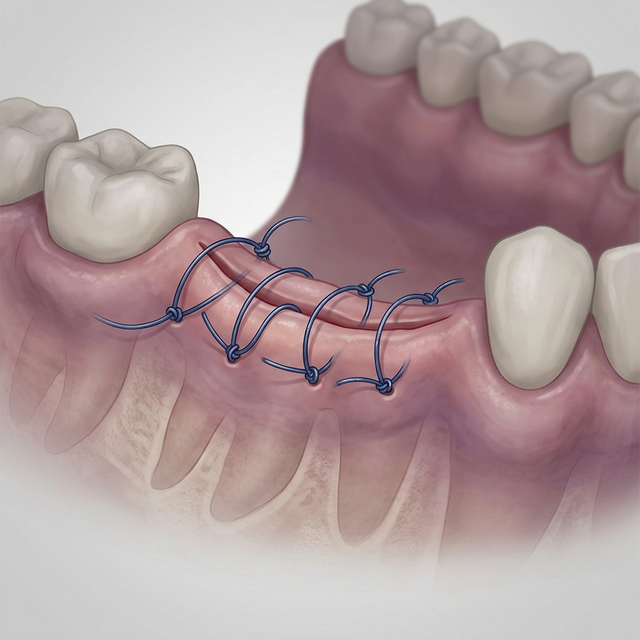
Not every extraction uses stitches. Simple extractions of fully erupted teeth often skip them. Sutures are more common after surgical work — especially wisdom teeth — when the office closed gum over the site.
Dissolvable (absorbable)
The most common extraction card. These break down in the mouth and usually do not need a removal visit.
- Materials those sheets name: polyglycolic acid, polyglactin (Vicryl), or gut
- Printed fade band: about 5 to 10 days (some types stretch toward 2 weeks)
- You may notice: small thread bits loosening while you eat or rinse
That fade is the dissolve column — not a promise every remnant is gone on day 7.
Non-dissolvable
Less common for routine extractions. Used when the office wants more control over closure.
- Materials those sheets name: nylon or silk
- Removal visit: commonly about 7 to 10 days, on their calendar
- Removal logistics: clinic pages describe a short visit — still their hands, not a home kit
If you are not sure which column you are on, the written aftercare card or a phone call is the check. Do not guess from a selfie.
Research Snapshot: Day-by-Day Suture Language
Windows below are research bands from public oral-surgery aftercare pages (ADA / AAOMS clinic-sheet language). Your written card wins. This desk did not time stitches.
| Day | Language those sheets usually print |
|---|---|
| Days 1–2 | Stitches feel firm. Tongue-playing is the skip. |
| Days 3–5 | Some loosening or fray is commonly described. |
| Days 5–7 | Dissolvable types begin to fade; bits may come free while eating. |
| Days 7–10 | Most dissolvable remnants gone; leftovers often resolve on their own. |
| Day 10+ | Stragglers are a follow-up trim / remove question if they bother you. |
Full first-week companion: Tooth Extraction Recovery: Day by Day.
If a Stitch Falls Out Early (Day 2 or 3)
Public cards treat this as anxiety-loud and usually not an automatic emergency — if the clot is still in the socket.
Language those sheets file as “usually fine”:
- Blood clot still visible in the socket
- No heavy or renewed bright-red flow
- Pain is not climbing
- Wound edges are not gaping widely
Desk logistics (not a protocol): do not push the thread back in. After the no-rinse window on your card, a gentle salt-water pass is the pantry habit. Watch for restarted bleeding or louder pain. A same-day office message is the lower-friction move even when it turns out to be a non-issue.
When to Skip DIY and Call
- Heavy bleeding that does not slow with the gauze-pressure station on your card
- Wound edges opening widely
- Bone visible in the socket — dry-socket / exposure language; use the already-published dry socket signs page, then call
- Pain that suddenly climbs
- Infection language: growing swelling after day 3, fever at the number on your card, pus, persistent foul taste — when to worry about swelling
Do not wait for a “suture kit” to ship.
Caring Around Stitches (Sheet Habits, Not a How-To Schema)
Days 1–3
- Fingers and tongue off the knots
- No vigorous rinse; let water flow passively if the card already allowed any rinse
- Eat on the opposite side — texture ladder: When Can I Eat Solid Food After Tooth Extraction?
- Brush neighboring teeth gently; stay off the knots. Timing: When Can I Brush Teeth After Tooth Extraction?
Days 3–7
- Gentle salt-water after meals if the sheet opened that window
- Soft plates; skip stringy or sticky foods that catch on thread
- Let dissolvable types fade — do not pull loose ends
Days 7+
- Remnants often finish on their own
- A dangling piece that bothers you is a follow-up trim, not home scissors
- Resume the hygiene the office named, still gentle at the site
Rinse types (alcohol-free vs peroxide-only-if-named): Best Oral Rinses After Extraction. Hub: Oral Care.
Common Stitch Notes (Desk, Not a Clinic)
“There is a white string hanging from my gums”
Dissolve-column language: thread can look white, yellow, or translucent as it breaks down. Pulling it is the skip.
“Food keeps catching”
Common and frustrating. Passive salt-water after meals is the pantry habit. Toothpicks and sharp tools are the skip.
“The stitches smell”
Some odor in week one is described as food + bacteria around knots. Consistent gentle rinsing is the habit those pages name. Odor plus climbing pain, pus, or fever is a call — swelling worry card.
“I swallowed a stitch”
Clinic sheets treat suture material as biocompatible and typically not a poison-control event. If you are unsure, the office can confirm.
No tagged Amazon cards on this page
This is a healing-marker guide. Dentist gauze, kitchen salt, and the written dissolve-vs-remove card already cover the station. A sealed “suture-care kit” is the skip. If you need elevation because oozing restarted, loft lives on the bleeding and sleep pages — not a new ASIN here.
Desk shortlist (not a suture trial): We did not time Vicryl on patients. Dissolve vs remove is their column. Salt-water is pantry. Tweezers are a skip.
When to skip DIY: Skip pulling threads. Skip buying a kit. Skip diagnosing bone-in-socket from a selfie. Heavy flow, a wound that looks open, or growing swelling after day 3 is a call.
Frequently Asked Questions
How long do dissolvable stitches take?
Public cards commonly print 5 to 10 days, sometimes toward 2 weeks. Your material wins.
What if a stitch falls out on day 2?
Those sheets often file it as acceptable if the clot is intact and flow/pain are not climbing. Message the office anyway if you are unsure.
Do I need a removal visit?
Only if the card named non-dissolvable sutures — or if a remnant bothers you after the printed fade band.
Key Takeaway
Stitches after extraction are a dissolve-vs-remove card plus skip-pulling-threads. Salt-water is pantry, not a SKU. Call if flow, opening, or infection language shows up — not if a thread looks loose on schedule.
Related Reading
- Bleeding After Tooth Extraction
- When to Worry About Swelling After Tooth Extraction
- Smoking After Tooth Extraction
- Jaw Stiffness After Tooth Extraction
- Oral Care
- Best Oral Rinses After Extraction
- Tooth Extraction Recovery: Day by Day
Written and researched by the JawPainAfterToothExtraction Editorial Team. Sources: ADA guidelines, Mayo Clinic, peer-reviewed dental literature. We are an editorial desk, not a dental clinic.
Sources: American Dental Association; American Association of Oral and Maxillofacial Surgeons.